Featured Content: Journal cover for Matter

Check out our new article on the stereoregular self-assembly of biobased recyclable polymer membranes for enantioselective nanofiltration. The article was featured in Matter, a Cell Press journal. We engineered a solely biobased, recyclable polyester featuring two inherent stereogenic centers. 🌱 Congrats to all the contributors in my team, namely Diana, Rifan and Hakkim, as well as our collaborators from the teams of Prof. Eugene Y.-X. Chen (Colorado State University) and Prof. Udo Schwingenschlogl (KAUST)!

The stereoregular self-assembly of the polymers yielded high-performance polyester membranes that adopt a tightly packed, extended molecular conformation. These dual-function chiral membranes enable enantioselective and controllable nanofiltration performance without the need for any added chiral selectors. Due to their denser packing and higher crystallinity, the membranes demonstrated superior thermal, mechanical, and chemical stability under harsh environments.

The membranes were successfully used to separate racemic mixtures, addressing a crucial challenge in the production of pure pharmaceuticals and agrochemicals. 💉 Furthermore, the complete recyclability of the polymer offers a highly sustainable design route for chiral separations, significantly reducing the environmental impact of chemical manufacturing., and they removed impurities below the threshold level of toxicological concern. The biodegradability of the membranes enable an environmentally friendly end-of-life treatment. ♻️

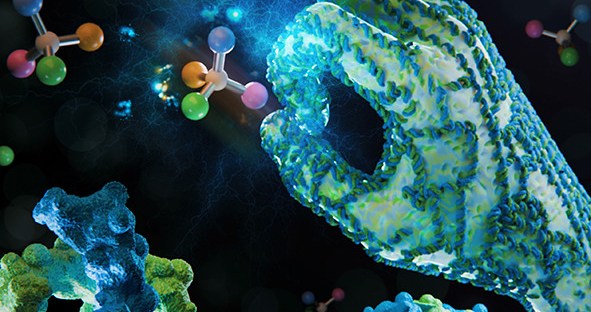
Here is the Matter front cover 🎨 for the article:
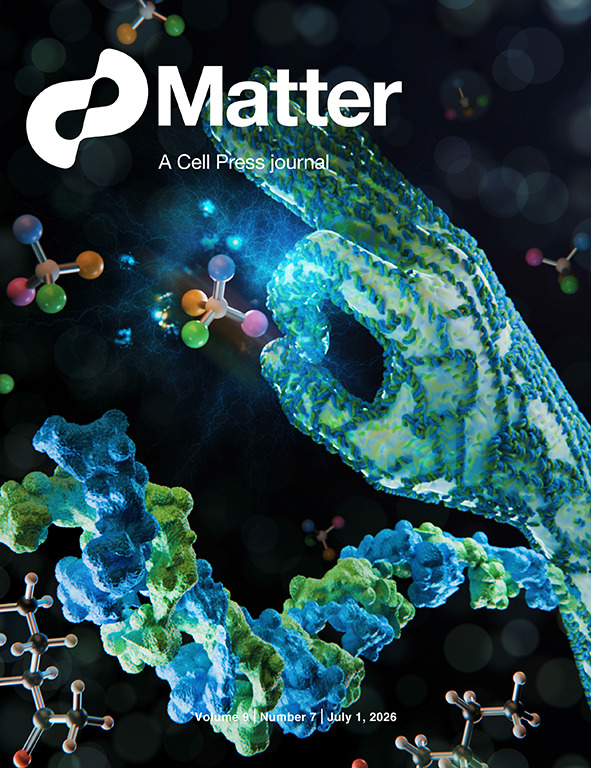
Image credit: Hassan Tahini @KAUST
Featured Content: Award-winning research on protein membranes!

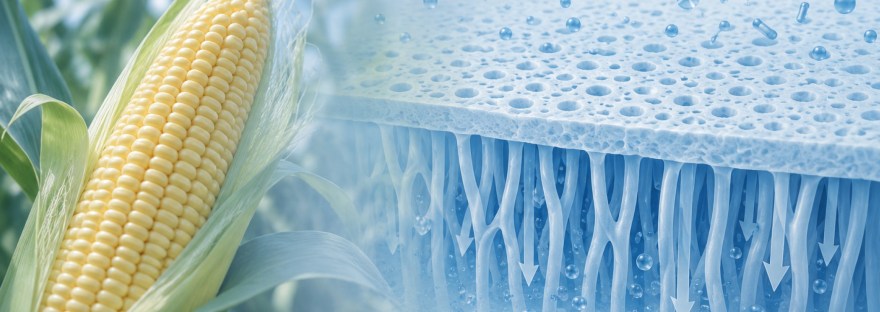
Award-Winning Research on Engineering Sustainable Protein Membranes from Corn 🌽

Our research group recently published a new open-access paper in SusMat, detailing our progress in replacing fossil-based plastics in industrial separation materials with sustainable alternatives.

🎬 Watch the video abstract for the project on YouTube.

Our solution utilizes zein, a biodegradable protein sourced from corn industry byproducts. By replacing traditional toxic chemicals with green solvents like acetic acid and ethyl lactate, we successfully engineered solvent-resistant nanofiltration membranes. In our study, we demonstrated that these membranes can effectively filter carcinogenic impurities out of pharmaceutical ingredients.

This work relied on critical interdisciplinary collaboration with the Habuchi Lab. By using single-molecule tracking with quantum dots, we were able to observe the real-time dynamics of the membrane forming at the microscopic level.

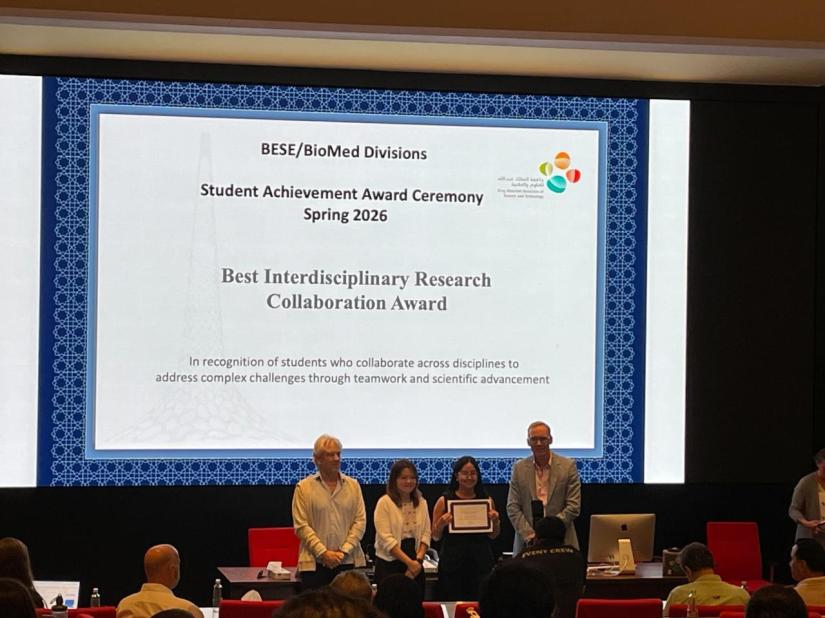
A huge congratulations to the paper’s first author, Claudia Oviedo, who won the KAUST BESE Interdisciplinary Collaboration Award for spearheading this project!

📖 Read the full open-access paper on SusMat

📰 Check out the feature story on KAUST Discovery

Featured Content: Congratulations to Aron for passing his PhD defense!

Proud supervisor moment! 🎓

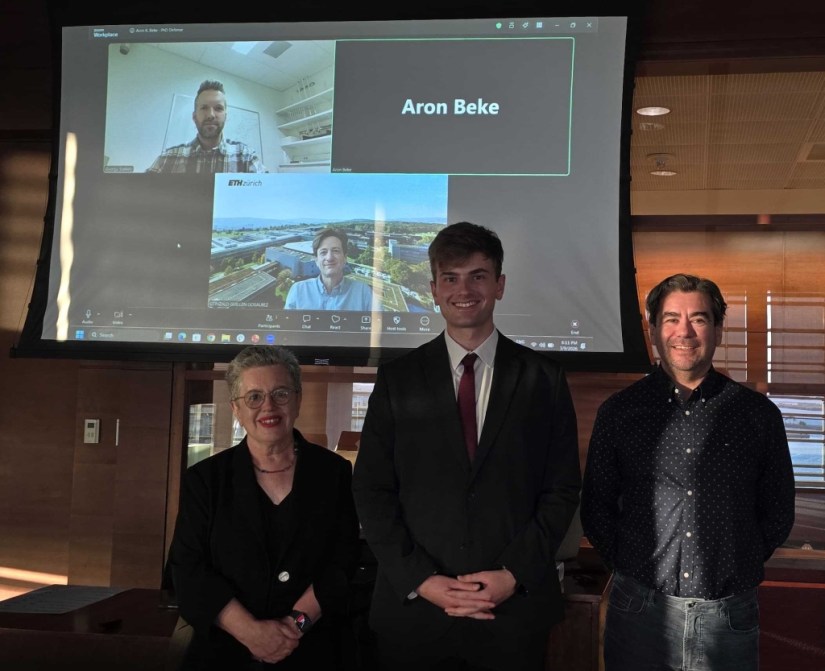
I am proud to announce that Aron has successfully defended his PhD thesis! Watching his growth over the years has been great as a supervisor. His thesis titled Data-driven and Multiscale Systems Design of Sustainable Nanofiltration Processes, is a significant step forward for the digitalization of the field of membranes. By integrating data science with multiscale modeling, he has developed innovative ways to make challenging molecular separations significantly more energy-efficient in a wide range of industrial domains.

One of the most unique aspects of this defense was its diversity—not just in thought, but in geography. With committee members spanning three different time zones, this was a truly international collaboration. My sincere thanks to Profs Suzana Nunes and Carlos Grande from KAUST, and Gonzalo Guillén-Gosálbez from ETH Zurich for their invaluable insights and for coordinating across borders to make this defense such a success.

I can’t wait to see the impact Aron continues to make on the world stage.

Featured Content: Best Paper Award!

Our paper just received the Advanced Membranes Best Paper Award! 🏆 Congratulations to Gergo and Nawader for the nice article, which you can read here. Open_Access_logo small Download the dataset from the OSN Database.

We identified the most important solvent parameters affecting solute rejection in membranes. 🚀  We reported a dataset with 407 solutes in 11 solvents, and utilized a graph neural network to predict solute rejection. Explainable artificial intelligence helped us reveal and visualize the underlying effects of atoms and functional groups altering the rejection. 👨‍💻

2023 Advanced Membranes Best Paper Award - Prof. Gyorgy Szekely small