Featured Content: Announcing OSN2024!

Dear Colleagues,

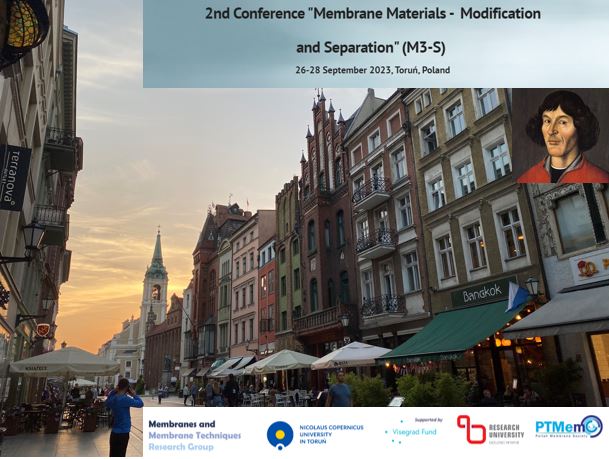
We are thrilled to extend our warmest invitation to the upcoming 9th International Conference on Organic Solvent Nanofiltration, set to take place on 4-6 March 2024 at the King Abdullah University of Science and Technology (KAUST). This prestigious event aims to gather leading experts, researchers, and industry pioneers from around the globe to delve into the latest advancements, discoveries, and applications in the field of OSN membrane science and technology. As a distinguished participant, you will have the opportunity to engage in captivating discussions, share invaluable insights, and forge meaningful collaborations that will shape the future of OSN. With an exceptional lineup of speakers, interactive workshops, and poster presentations, this conference promises to be an unforgettable experience for all attendees. Join us in this stimulating journey of knowledge exchange and be a part of revolutionizing the OSN field. We look forward to your esteemed presence at the OSN 2024!

Sincerely,

Gyorgy Szekely and Suzana Nunes

Conference Chairs

Featured Content: ACS GCE Award 2023!

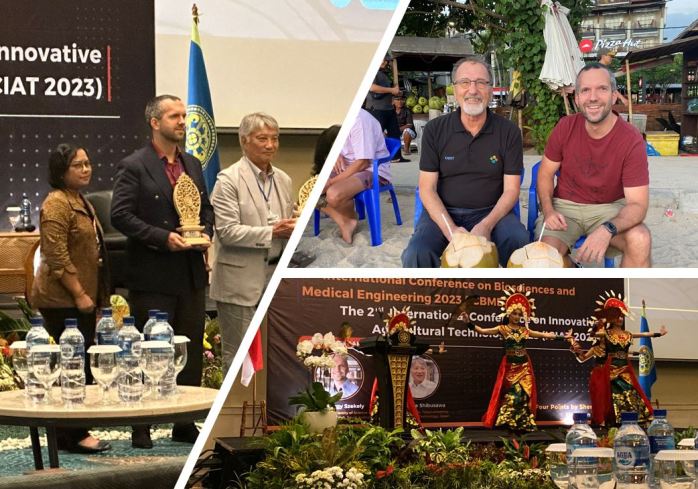
It was such a pleasure to network with colleagues at the 27th Annual Green Chemistry & Engineering Conference in Long Beach 🌊 California Flag_of_California organized by @ACSGCI and @ACSSustainable. The title of my award keynote talk was ‘Sustainable membranes for solvent- and oil-resistant nanofiltration’.♻️ Happy to receive the 2023 ACS SCE Lectureship Award! 🏆 Thanks to my students and colleagues! I also organized a symposium on ‘Sustainable membrane separations: from polymers to processes’ with the help of Joyce Cavalcante. 🙏

ACS GCE award

Featured Content: Elected Fellow of the Royal Society of Chemistry!

I am humbled to join the esteemed community of RSC Fellows. ✍🏆 I am grateful to past and present group members, collaborators and mentors, for their invaluable contributions to my success! 🙏 I am glad to be elected Fellow of the Royal Society of Chemistry.

Read the full story here, the interview brief is below:

KAUST Assistant Professor of Chemical Engineering Gyorgy Szekely has been named a Fellow of the Royal Society of Chemistry (FRSC). Professor Szekely was elected for his outstanding contributions to separation science, particularly membranes.

The RSC is the largest organization in Europe dedicated to advancing the chemical sciences and the professional body for chemists in the United Kingdom. Founded in London in the 1660s, it is the world’s oldest chemical society.

The learned society requires candidates for the Fellow distinction to have at least five years of senior responsibility or evidence of an outstanding contribution to the chemical sciences. In addition, they must have a completed application for review by a committee.

The appointment will allow the British-Hungarian researcher to showcase his research and network with scientists worldwide.

“I accept this distinguished recognition with great honor and deep appreciation. Being selected as a Fellow of RSC represents a milestone in my professional journey,” he said of his election.

“I am humbled to join the esteemed community of individuals who have contributed significantly to their respective fields. This recognition of my achievements by such a respected society validates my dedication and efforts but also inspires me to continue striving for excellence in my research and teaching.”

Throughout his career, Szekely and his team have been committed to solving challenges related to membrane fabrication for harsh environments; and advancing the application of these membranes through the development of new membrane materials and process intensification.

Membrane research is a promising field that holds the key to numerous scientific and technological advancements required to address many of the United Nations’ Sustainable Development Goals. The intricacies of membranes, which are selective barriers, have the potential to revolutionize a wide range of industries. This research potential, in turn, drives his agenda at KAUST.

The European Membrane Society council member recently received the 2023 ACS Sustainable Chemistry & Engineering Lectureship Award. He received the award for demonstrating “thought leadership in sustainable separations via the synergistic combination of outstanding materials science and robust chemical engineering.”

“I would be remiss if I did not acknowledge my mentors, colleagues and students whose unwavering support, contribution, guidance and encouragement have played an instrumental role in my achievements,” Szekely emphasized. “Their wisdom, expertise and insights have shaped my professional growth, and I am grateful for their invaluable contributions to my success.”

by David Murphy

Featured Content: OSN and NMR databases

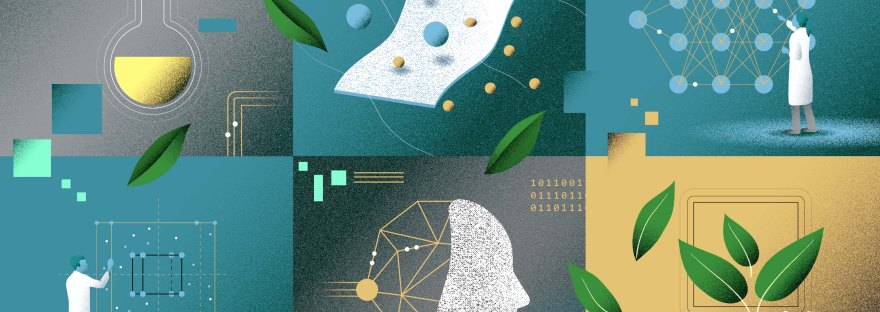
We have established two databases, one for organic solvent nanofiltration (OSN) and another one for nuclear magnetic resonance (NMR) impurities.

The OSN Database is the first repository for membrane separation data obtained in organic solvents published in September 2021. We envision a future where membrane process and material development relies on data-driven design methodologies. The process design part of any membrane separation are optimized and monitored using machine learning models and the new membrane materials are developed based on the collected data. The database offers several predictive tools for free to use: rejection prediction, enantioseparation prediction, and similarity search. Read the corresponding, open-access article introducing the original database and our opinion on data science in the membrane field.

The NMR Impurities Database contains solvents, acids and basis, including the emerging sustainable alternatives, and was established in March 2023. Besides obtaining new data, we compiled the current and previous works as well. The searchable database facilitates impurity identification. This database forms the basis of an online interface through which users can browse solvent spectra and search for signals of unknown origins to easily identify residual impurities in NMR spectra. In the online Python-based application, the NMR database connects to the website using Flask. A search on the main site triggers a query from the database managed by Pandas. Read the corresponding, open-access article introducing the original database in ACS-SCE.


Featured Content: Congratulations to Fadhilah, Cong, Gergo and Jiahui for passing their PhD examination!

Congratulations to Fadhilah Alduraiei, Cong Yang, Gergo Ignacz and Jiahui Hu for passing their PhD examination at KAUST during spring 2023. Many thanks to their committee members, namely Profs Peng Wang, Sanat Kumar, Sigurdur Thoroddsen, Carlos Grande, Suzana Nunes, Pedro Castano, Javier Martinez, Jozsef Kupai, Pascal Saikaly and Kyle Lauersen. Their hard work and dedication have paid off, congratulations! Wishing you all the best for your career!